
Home  / Blog  / How to Choose the Right Horse Stall Partitions for Your Barn
Barn March 08, 2021

How to Choose the Right Horse Stall Partitions for Your Barn

Planning a horse barn? Stall partitions play a key role in your barn’s safety, ventilation, and overall function. In this guide, we explore ideal stall sizes, partition height, and design options to help you build a space that suits your horses’ needs and your facility’s purpose.

How to Choose the Right Horse Stall Partitions for Your Barn

What You Need to Know for Safe, Functional, and Comfortable Barn Interiors

When designing a horse barn—whether it's for personal use, boarding, or a professional operation, the Horse Stall Partitions play a critical role in your barn's safety, airflow, socialization, and overall functionality.

While every facility is unique, there are industry best practices and key architectural considerations that should guide your stall layout. In this guide, we’ll focus specifically on Horse Stall Partitions, from sizing and dimensions to design choices that balance privacy, ventilation, and safety.

Standard Stall Dimensions: What’s Ideal?

The first decision when planning your stalls revolves around stall size, which should reflect:

  • Your horse’s breed and body size
  • How much time they spend inside
  • Intended barn use (boarding, training, breeding, etc.)

For most adult horses, we recommend a 12’ x 12’ stall, which comfortably accommodates a 1,000–1,200 lb horse. This size allows room to:

  • Turn around safely
  • Lie down and rise without hitting walls
  • Minimize the risk of injury due to cramped movement

For larger breeds such as Warmbloods or Drafts, a 14’ x 14’ stall or larger may be ideal. Ponies or miniature horses can be comfortably housed in smaller spaces like 10’ x 10’.

Pro tip: Stall fronts and partitions are typically built in 12-foot widths for modularity, even if the depth varies slightly.

Note: The remainder of this article will cover specifics related to stall partitions. Please visit this article for more tips and best practices regarding Stall Fronts and Stall Doors.

When considering the height, it's useful to know that horse barns are usually built with a ceiling height of 10' to 12'. Please also consider that horses can often kick as high as 7'. For this reason, we recommend that stall partitions should be 8' tall. That being said, 7'6" tall stall partitions can work in older barns with smaller ceilings.

Stall Partition Height

The vertical dimension of a stall is just as important as the floor space. Most modern barns have ceiling heights between 10’ and 12’. Horses can kick as high as 7 feet, so stall partitions should be no lower than 8’ for safety and containment.

However, in older or retrofit barns with limited vertical space, a 7’6” partition may suffice, though 8’ remains the gold standard for strength and ventilation.

Designing Your Stall Partitions: Privacy vs. Airflow

When selecting a partition design, it’s important to align form with function. Your choice should be informed by:

  • Your horses’ temperament
  • Climate and air circulation requirements
  • The purpose of the barn (boarding, private, breeding, training, etc.)

1. Full Privacy Partitions (Solid Wood or HDPE)

Best for:

  • Boarding barns
  • Training barns with unfamiliar horses
  • Aggressive or anxious horses

These partitions provide visual and physical separation, helping to reduce conflict between unfamiliar or reactive horses.

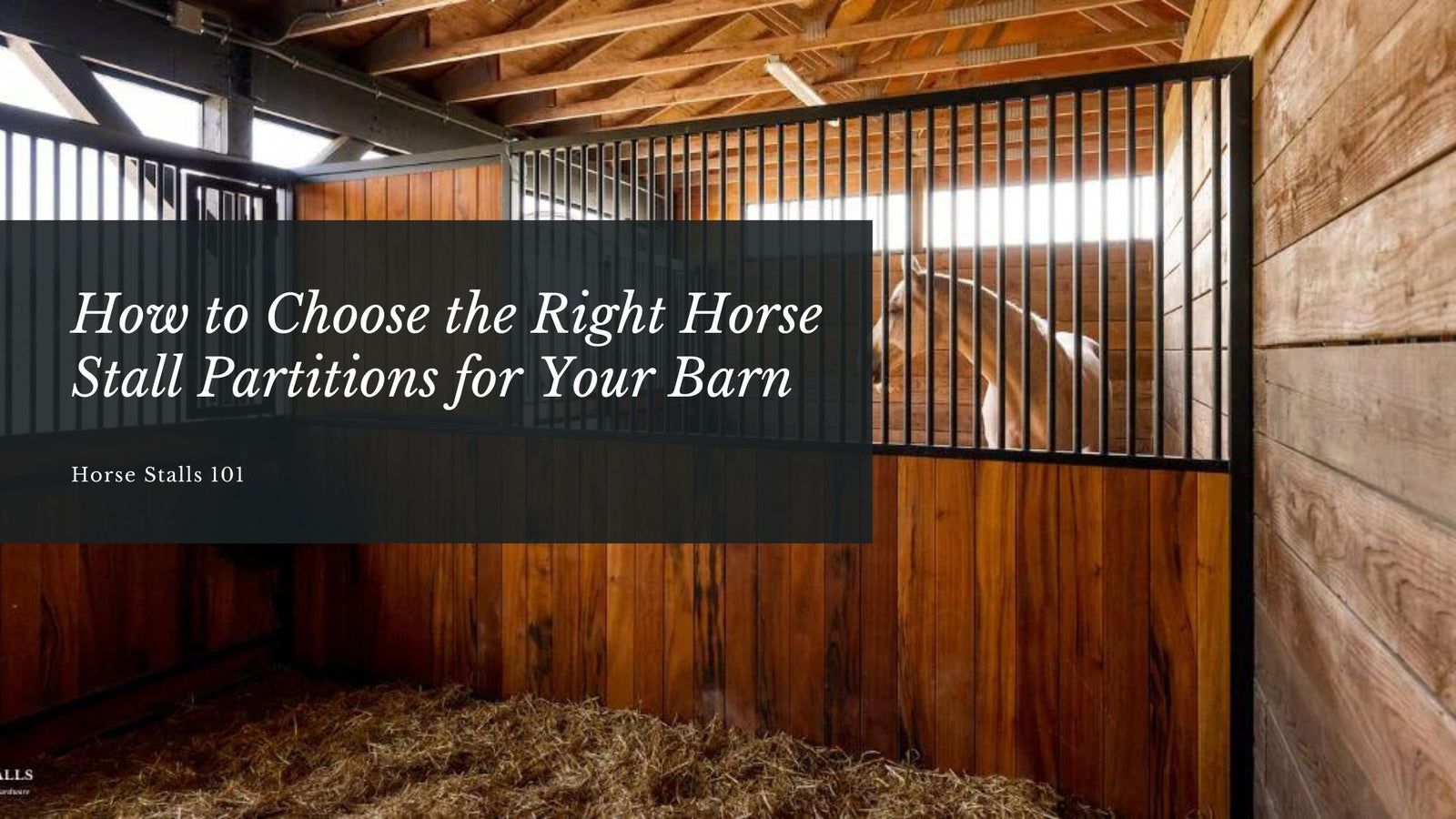
2. Partial Privacy Partitions (Wood Bottom + Grilled Upper)

Best for:

  • Mixed-use barns
  • Training facilities
  • Regions with warm or humid climates

These designs balance safety and airflow. Horses remain separate but benefit from visual connection and improved ventilation.

3. Half-Grilled Partitions (Grill from Top to Midpoint)

Best for:

  • Private barns with well-acquainted horses
  • Cold to temperate climates
  • Social horses who benefit from interaction

This is a popular option for hobby farms or private stables, allowing horses to interact with one another and share airflow for a more natural environment.

Climate Matters: Don’t Ignore Airflow

In humid or hot regions—such as the Southeastern U.S.—ventilation is critical to barn health. Proper airflow reduces ammonia buildup, supports respiratory health, and regulates barn temperature.

When natural airflow is limited, grilled or mesh partitions significantly improve stall ventilation without sacrificing safety.

Construction Materials Matter

Stall partitions at American Stalls are custom-built using:

  • Marine-grade tongue-and-groove lumber (oak, southern yellow pine, HDPE, etc.)
  • Solid steel framing, hot-dip galvanized and powder-coated for long-term corrosion resistance
  • 1" round vertical bars spaced at 3” or less for safety and durability

We tailor every partition to your project’s unique dimensions, use, and aesthetic.

Quick Reference Chart: Choosing the Right Partition Style

When thoughtfully designed, stall partitions do far more than divide space—they enhance the entire experience for horse and human alike. With the right height, materials, and airflow considerations, you can create a barn that promotes well-being, safety, and elegance.

Have questions or need help customizing your barn?
Contact our expert team at 📞 (855) 957-8255 or ✉️ sales@americanstalls.com. With 16+ years of experience, we’ll help you bring function and style together—beautifully.

Barn  

Updated: July 02, 2025

Latest Blogs

View All Posts
Premium Stall Flooring Options: What to Know

Premium Stall Flooring Options: What to Know

This blog post provides a comprehensive guide to designing premium horse stalls, emphasizing the importance of selecting the right luxury flooring and custom barn doors to ensure safety, comfort, and durability for horses while enhancing barn management and aesthetics. It reviews various flooring options—such as poured rubber, interlocking mats, rubber pavers, concrete, and composite mats—detailing their pros, cons, and best uses based on stall purpose and horse needs. The post highlights key safety considerations like slip resistance, shock absorption, drainage, and thermal comfort, and outlines best practices for installation and maintenance to maximize longevity and hygiene. It also discusses how custom barn doors can be integrated with flooring for improved functionality, safety, and visual appeal. The overall message is that investing in high-quality flooring and doors not only protects animal welfare and reduces maintenance costs but also adds long-term value to the property, and readers are encouraged to seek expert consultation for tailored solutions.

Hidden
The Complete Guide to Luxury Horse Stall Design

The Complete Guide to Luxury Horse Stall Design

This blog post provides a comprehensive guide to planning, designing, and building luxury horse stalls, emphasizing the importance of balancing animal welfare, safety, efficiency, and aesthetics. It outlines key considerations such as setting clear goals, evaluating site conditions, and prioritizing horse-centered dimensions and durable materials for safety. The post details design elements that enhance beauty, including cohesive architectural styles, natural light, and high-end finishes, while also addressing functional aspects like workflow, feeding, watering, and storage systems. It discusses practical building choices for longevity, the integration of smart technology and sustainable practices, and offers advice on budgeting, timelines, and maintenance to ensure long-term value. The overall message encourages thoughtful investment in luxury horse stalls to create a safe, efficient, and visually appealing environment, with American Stalls offering customized solutions for those seeking professional guidance.

Hidden
European vs. American Stall Fronts: Which is Best for Your Barn?

European vs. American Stall Fronts: Which is Best for Your Barn?

This blog post provides a comprehensive comparison of European and American stall fronts for Luxury Horse Stall Systems, focusing on how each design tradition addresses safety, ventilation, materials, aesthetics, and functionality. European stall fronts emphasize privacy, calm, and refined aesthetics with solid lower panels and integrated ventilation, while American styles prioritize openness, airflow, and modularity with visible bars and heavy-duty frames. The article discusses the impact of stall front choices on horse welfare, barn operations, and long-term property value, highlighting considerations such as climate, herd dynamics, maintenance, and architectural style. It offers practical recommendations for different types of equine facilities and encourages readers to consult American Stalls for customized, high-quality solutions tailored to their specific needs.

Private
Custom Barn Door Design Trends for 2026

Custom Barn Door Design Trends for 2026

This blog post discusses the latest trends in custom horse stalls, focusing on contemporary barn door styles, premium finishes, and advanced hardware that combine functionality with luxury aesthetics. It highlights how thoughtful stall design enhances horse safety, comfort, and barn efficiency, with popular door options including concealed-track sliding doors, modern Dutch doors, full-height flush doors, and mixed-material designs. The article details high-end finishes such as premium woods, custom stains, durable paints, and powder-coated metals, as well as hardware innovations like heavy-duty tracks, secure latches, and integrated feed access. Emphasis is placed on features that improve ventilation, hygiene, and durability, and the post outlines American Stalls’ custom design process from consultation to installation. The overall message is that investing in custom horse stalls not only elevates the barn’s appearance but also ensures a safe, efficient, and lasting environment for horses, tailored to the specific needs of different equestrian facilities.

Hidden