
Home  / Blog  / The Bedding Blocker Explained
Bedding Blocker March 30, 2022

The Bedding Blocker Explained

Say goodbye to messy barn aisles and wasted bedding. Our new Bedding Blocker system is a simple, safe, and effective solution designed to keep bedding in and mud out—helping you save money and keep your barn clean. Easy to install and built to last, it's a must-have for stalls with in-and-outs or high traffic areas.

The Bedding Blocker Explained

It’s finally the evening, and the sun is just about ready to set. We find ourselves in our barn to feed our horses and wrap up the day. Oftentimes, wrapping up the day means keeping the barn tidy. One look down the aisle, though, and we see shavings sprawled all across the barn aisle. Frustration quickly ensues as we watch bedding get kicked out of stalls and mud being dragged in.

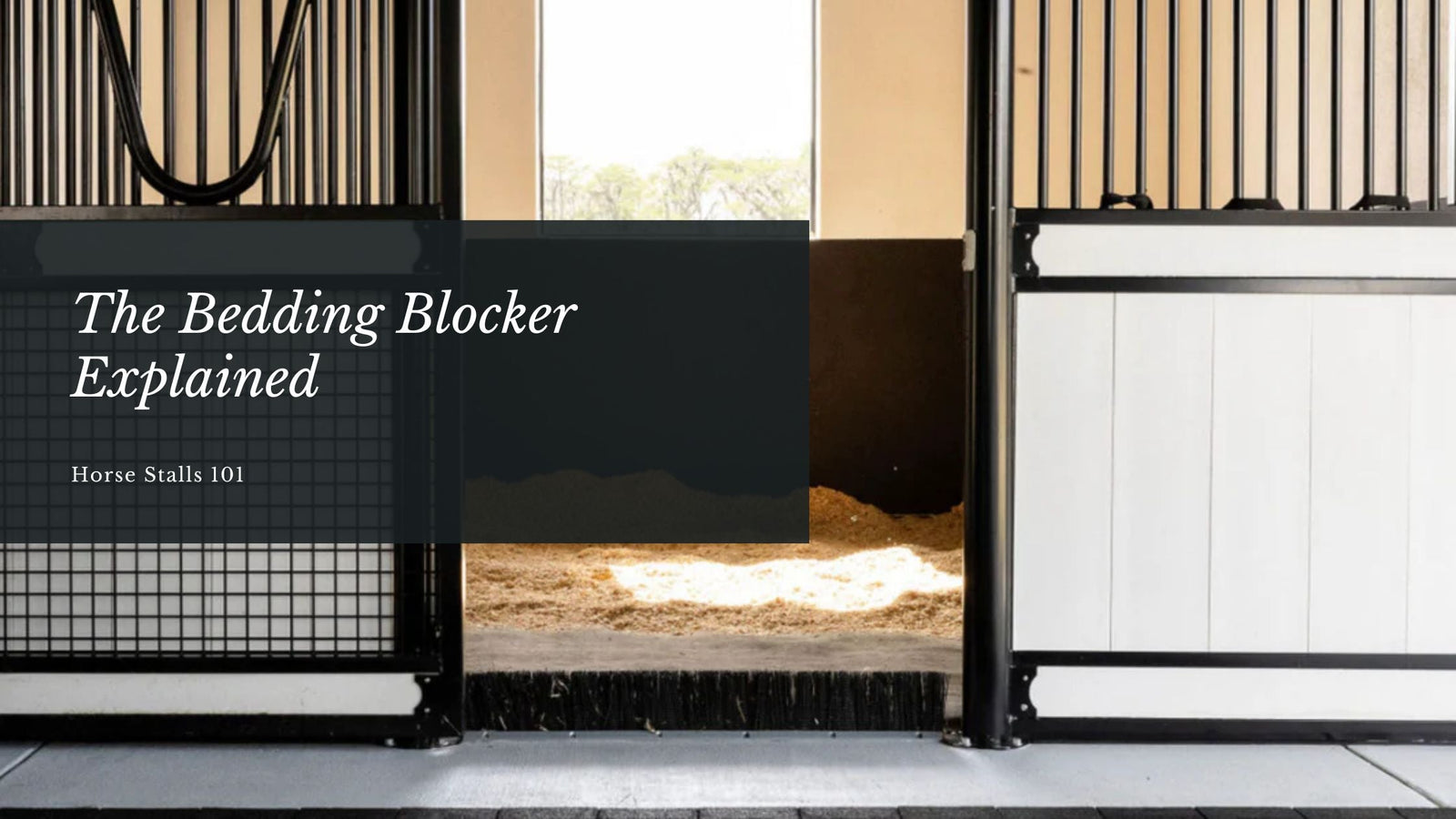
If you can relate to this occurrence, you will be excited by our newest addition to our product line. We are excited to introduce the Bedding Blocker system. The Bedding Blocker is the first and only product designed to save you money on horse and large animal bedding costs. This low-profile, safe threshold barrier keeps more bedding in your stalls and mud and debris out.

The Bedding Blocker is invaluable on horse stalls with in-and-out runs and can also be used on the front of a stall. It helps keep your aisle tidy and free from shavings.To give you an overview, each Bedding Blocker system is comprised of the following components:

Tools Required for Installation


Instruction Manual

The Bedding Blockers install in less than 10 minutes, using minimal installation expertise. [Watch Installation Video]. One question that many clients ask is, “What kind of surfaces can the Bedding Blocker be used on?” While a solid floor is ideal, you can use a bracket system and pressure-treated lumber (not included) to install your Bedding Blocker over soft surfaces such as dirt, screenings, and stall mats, so you aren’t limited to a barn floor.

Below are other frequently asked questions about the Bedding Blocker System.

Question: What if my horse stall door opening is larger than 48″ or smaller than 48″ wide?

Answer: If your stall door opening is larger than 48″, the Bedding Blockers can easily be lined up end to end for larger thresholds. In contrast, if your horse stall opening is less than 48″, all Bedding Blocker components can be cut using a hacksaw with a metal cutting blade. 

Question: What if my horse tried to eat the bristles?

Answer: The bristles are designed to stay in place. With proper installation, animals should be unable to remove the brush component from the bases.
If you have a persistent chewer or destructive animal, we recommend spraying the brush with an anti-chewing deterrent made for animals.

Question: Can I drive a cart or roll a wheelbarrow over the Bedding Blocker?

Answer: Yes! The bristles are designed to allow wheelbarrows and carts to pass through them easily. You can even view a video of a wheelbarrow in action here.

Question: How do I maintain the longevity and durability of the Bedding Blocker?

Answer: The Bedding Blocker is designed to block bedding and debris. We suggest running a pitchfork through the bristles when cleaning your stalls. This will remove excess buildup of dirt and debris and keep your brush’s integrity intact. You can also remove the brush by removing one base and sliding the brush out. If the bedding blocker is installed in a muddy area outside, you may need to clean it with a hose and mild detergent more frequently.

While the brush component is designed to last for an extended period, several factors will determine how often your brush needs to be replaced. Animal traffic in and out of stalls, the amount of dirt and mud outside the stall, the time spent cleaning the brush, and general use will determine how often the brush should be replaced. In this case, you can purchase a replacement brush from our team.

Do you have any other questions? Please get in touch with our design team at (855) 957-8255 or email us at sales@americanstalls.com. Our team of expert consultants would love to sit down, understand your questions, and provide our 17+ years of experience.

Bedding Blocker  

Updated: August 08, 2025

Latest Blogs

View All Posts
How to Choose the Right Stall Door for Your Horses

How to Choose the Right Stall Door for Your Horses

This blog post emphasizes the importance of equestrian barn craftsmanship when selecting custom stall doors, highlighting how well-crafted doors enhance safety, durability, and barn aesthetics. It details key considerations such as structural integrity, reliable hardware, door style, kick protection, ventilation, and visibility, as well as the importance of matching door design to the barn’s architecture and branding. The article compares material options, underscores the value of professional installation and regular maintenance, and explains how investing in quality doors can reduce long-term costs. American Stalls is presented as a provider of tailored, safety-focused custom stall doors, encouraging readers to consult with them for solutions that balance function, safety, and style.

Hidden
Premium Stall Flooring Options: What to Know

Premium Stall Flooring Options: What to Know

This blog post provides a comprehensive guide to designing premium horse stalls, emphasizing the importance of selecting the right luxury flooring and custom barn doors to ensure safety, comfort, and durability for horses while enhancing barn management and aesthetics. It reviews various flooring options—such as poured rubber, interlocking mats, rubber pavers, concrete, and composite mats—detailing their pros, cons, and best uses based on stall purpose and horse needs. The post highlights key safety considerations like slip resistance, shock absorption, drainage, and thermal comfort, and outlines best practices for installation and maintenance to maximize longevity and hygiene. It also discusses how custom barn doors can be integrated with flooring for improved functionality, safety, and visual appeal. The overall message is that investing in high-quality flooring and doors not only protects animal welfare and reduces maintenance costs but also adds long-term value to the property, and readers are encouraged to seek expert consultation for tailored solutions.

Hidden
The Complete Guide to Luxury Horse Stall Design

The Complete Guide to Luxury Horse Stall Design

This blog post provides a comprehensive guide to planning, designing, and building luxury horse stalls, emphasizing the importance of balancing animal welfare, safety, efficiency, and aesthetics. It outlines key considerations such as setting clear goals, evaluating site conditions, and prioritizing horse-centered dimensions and durable materials for safety. The post details design elements that enhance beauty, including cohesive architectural styles, natural light, and high-end finishes, while also addressing functional aspects like workflow, feeding, watering, and storage systems. It discusses practical building choices for longevity, the integration of smart technology and sustainable practices, and offers advice on budgeting, timelines, and maintenance to ensure long-term value. The overall message encourages thoughtful investment in luxury horse stalls to create a safe, efficient, and visually appealing environment, with American Stalls offering customized solutions for those seeking professional guidance.

Hidden
European vs. American Stall Fronts: Which is Best for Your Barn?

European vs. American Stall Fronts: Which is Best for Your Barn?

This blog post provides a comprehensive comparison of European and American stall fronts for Luxury Horse Stall Systems, focusing on how each design tradition addresses safety, ventilation, materials, aesthetics, and functionality. European stall fronts emphasize privacy, calm, and refined aesthetics with solid lower panels and integrated ventilation, while American styles prioritize openness, airflow, and modularity with visible bars and heavy-duty frames. The article discusses the impact of stall front choices on horse welfare, barn operations, and long-term property value, highlighting considerations such as climate, herd dynamics, maintenance, and architectural style. It offers practical recommendations for different types of equine facilities and encourages readers to consult American Stalls for customized, high-quality solutions tailored to their specific needs.

Private