


How to Determine Which Type of Barn Exterior Is Best for You
The materials that you use to build your horse barn will have a tremendous and ongoing effect on the barn’s performance, durability, aesthetics, and maintenance needs. They’ll also affect your initial construction costs and your maintenance budget. When choosing materials for a horse barn exterior, it’s essential to consider all those factors to decide which material is best.
Metal, wood, and composite materials are all commonly used on horse barns. Let’s take a look at the pros and cons of each and what to consider before you build your dream barn.
Wood Horse Barn Exteriors
Wood is the most traditional option for your horse barn exterior. It’s widely available and relatively simple to install, so the initial construction and any necessary repairs can be completed easily. Wood also offers desirable insulation properties, especially when compared to a metal exterior. Wood can help keep your barn cooler in the summer and warmer in the winter, plus it helps absorb sound for a quieter barn.

Many barn owners prefer wood for its desirable and classic aesthetic. If you’re after a natural look, wood can deliver that style.
Wood loses some of its appeal when you consider its durability. Wood can be cracked and splintered by a horse’s kick, and it’s a tempting surface for horses to crib or chew on. If you’re designing a barn with Dutch Doors and runs where horses will be able to access the exterior, you may need to be prepared to cover exposed wood surfaces to protect them from your horses.
Wood also has substantial maintenance requirements. It needs to be painted or stained regularly and is prone to rot and rodent or insect damage.
Advantages:
- Easily sourced
- Relatively affordable
- Desirable, natural aesthetic
- Insulative and sound absorption properties
Things to consider:
- Can be damaged by kicks
- A tempting surface for chewing or cribbing
- Needs regular maintenance
- Can rot or be damaged by insects or rodents
Metal Horse Barn Exteriors
Metal horse barn exteriors, which are typically steel, lack the insulative properties that wood possesses, but they can be paired with insulation to help regulate the barn’s temperature. Metal exteriors can be loud and offer little sound absorption, but again, you can pair them with insulation to reduce noise inside the barn and create a more enjoyable space.

Metal brings a sleek, modern look to a barn, and it can be a desirable trait for many barn owners. Steel is a highly durable choice, so it can maintain that look for years, even when exposed to harsh elements.
If you choose a metal barn exterior, you need to take steps to prevent potential injuries to horses. If your horse were to kick a metal panel that isn’t lined with wood, they could expose sharp edges and cut themselves. If your horses have access to your barn’s exterior, you’ll need to periodically check the siding to ensure that no edges or corners are curling up, since horses could injure themselves on exposed edges.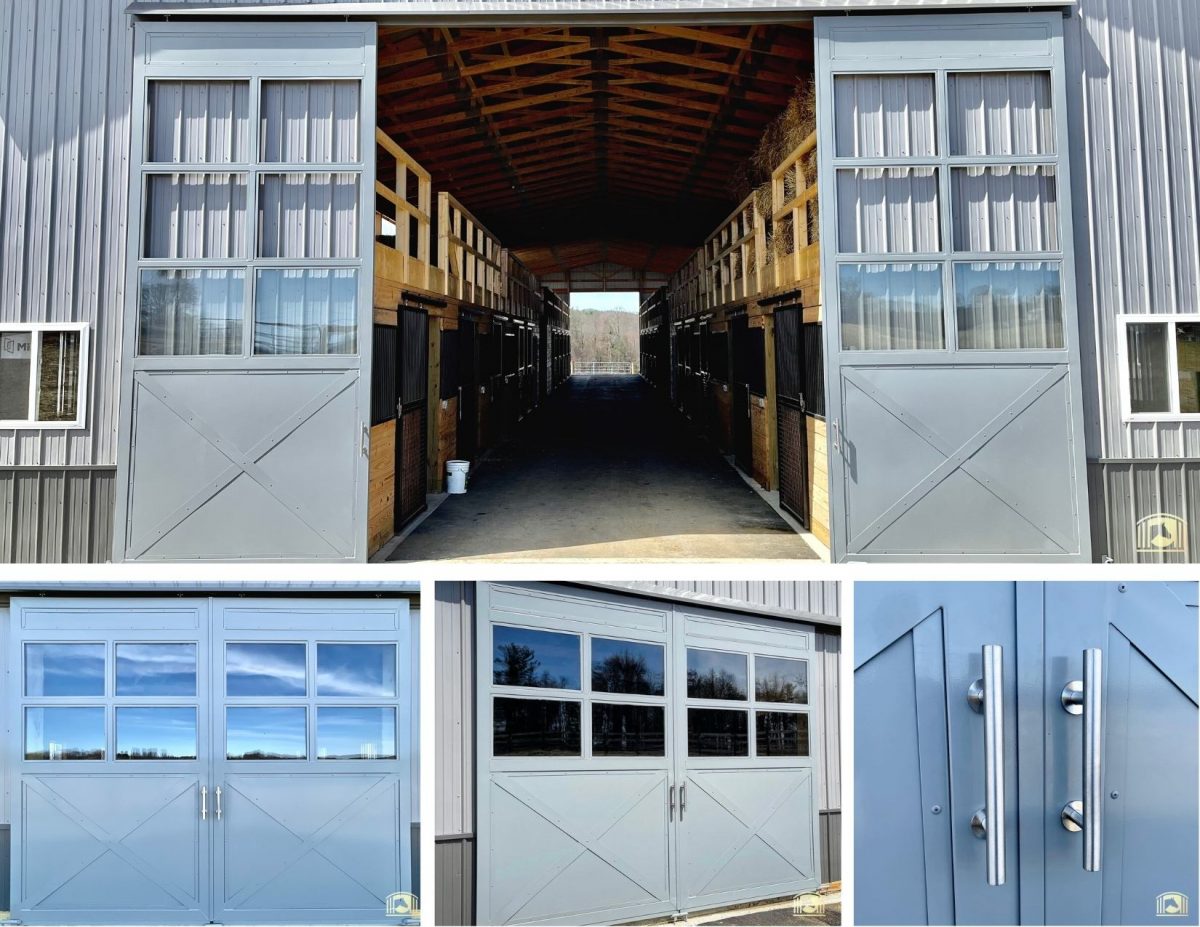
Metal horse barns can be initially cheaper than wooden horse barns, especially if you’re using a prefabricated barn that doesn’t require any customization. Keep in mind that such a structure will limit your design options, though you can personalize it by ordering custom components, such as Horse Stall Systems.
Since metal requires less maintenance than wood, it can be a long-lasting investment for your barn that will continue to save you money over time. However, if metal siding is ever damaged or worn, you will need to promptly paint or fix it to prevent rusting.
Advantages:
- Features a sleek, modern look
- May cost less upfront than wood
- Requires minimal maintenance
- Highly durable, even when exposed to harsh weather
Things to consider:
- Can potentially lead to injuries because of sharp edges
- Lacks insulative properties
- Lacks sound absorption, so barns can be loud
- Can rust over time
Composite Horse Barn Exteriors
Composite products have also become an option for horse barns. These products combine synthetic and natural materials, such as wood-plastic composite or high-density polyethylene siding. 
A composite horse barn exterior offers several advantages. These materials tend to be highly durable and non-porous, resisting rotting and rusting. They’re also highly resistant to pests, so you don’t have to monitor them as closely as you need to watch your wood barn exterior.
Composite products are strong, too. They’re usually chew-resistant, which is ideal if horses will have access to your barn exterior, and they’re so durable that they’re often used as kick walls. These materials provide insulating properties similar to wood and can also help absorb sound, creating a quieter barn.
Unlike wood, which needs to be painted or stained, composite products don’t require such regular maintenance, so they can save you time and money. You’ll find these products available in many styles and colors, giving you plenty of options and control over the look of your barn. However, composite is generally more expensive than wood or metal up front, so installing a composite exterior for a horse barn can be quite an investment.
Advantages:
- Very strong and durable
- Chew-resistant and resistant to pests, rotting, and rusting
- No need to stain or paint
- Insulative for a more comfortable barn
Things to consider:
- Significant upfront cost
Contact American Stalls as You Plan Your Barn Build
At American Stalls, we specialize in custom-built components for your horse barn, including custom Horse Barn Windows, Horse Barn Doors, and Window Shutters. We not only build these components to your specific dimensions, but we also build them in styles and finishes that reflect your vision for your barn and the materials you’ve chosen for your barn exterior.
We encourage you and your contractor to contact us early on in the barn building process so we can best serve you. Contact us today at (855) 957-8255 or email us at sales@americanstalls.com to schedule a sales and design consultation or with any questions.


