- Home
- About Us
-
Custom Products
- Shop by Products
- Resources
- Contact Us
-

Airflow is a top priority for horse owners, no matter the climate. The right stall front design can significantly impact ventilation, equine health, and overall barn comfort. In this article, we explore how different materials, especially mesh, influence airflow in horse stalls.


Barn-entry doors are one of the first features you notice upon entering a horse farm, making them a crucial design element. Whether for a private or commercial barn, the right doors enhance both aesthetics and functionality. Key considerations include ventilation and natural light—both essential for horse health and barn comfort.

Horse stalls are one of the first things that our clients begin to think about when they plan their upcoming barn project.
Chances are, you know exactly the look you'd like in your barn.
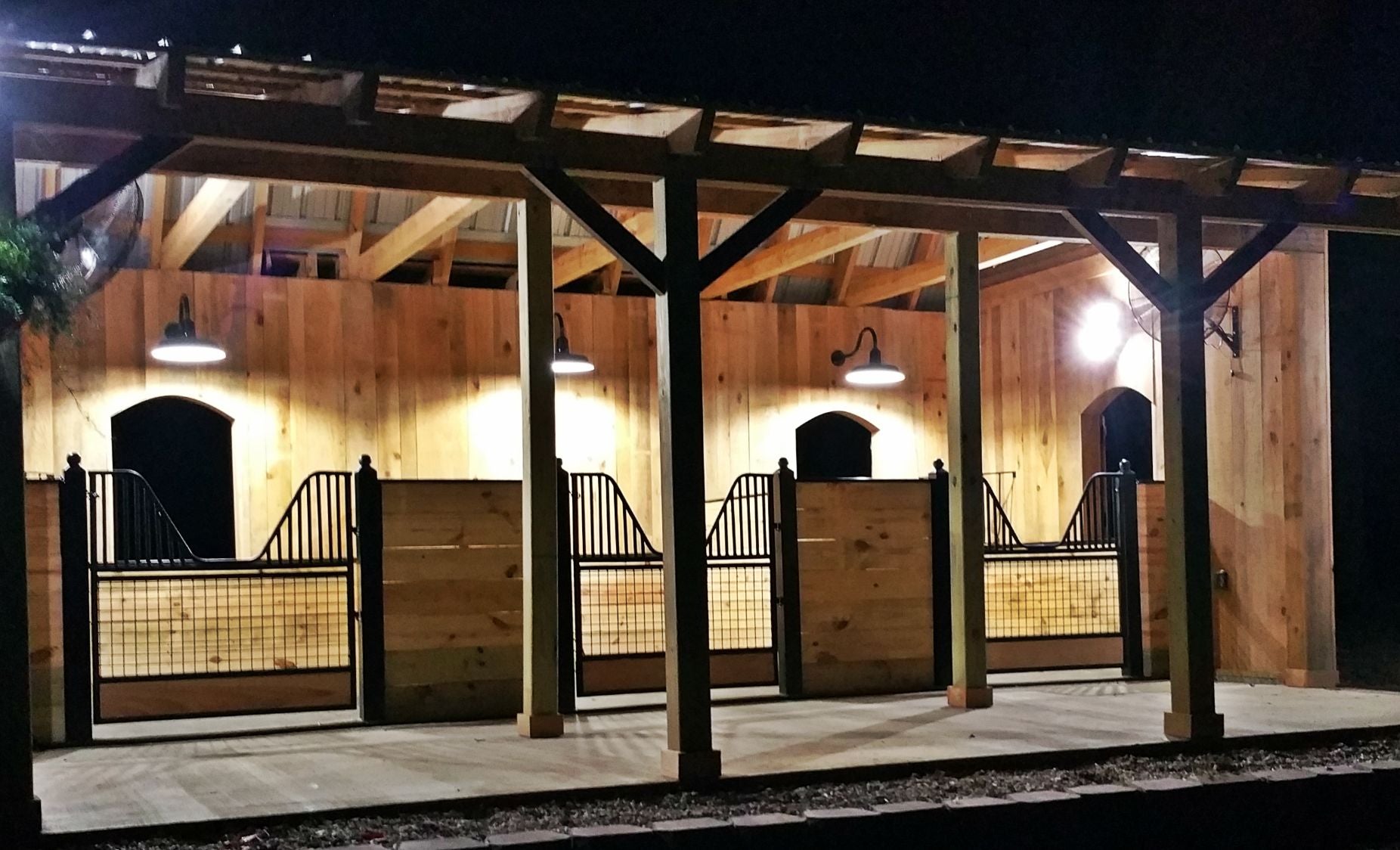
In the world of horse stalls, there are thousands of stall styles. In this ocean of choices, there are only two types of stall doors – sliding doors and hinged doors. Although it may not seem like it, your stall door choice is one the most important decisions when it comes to your horse barn. You will use your horse stall door thousands of times – opening it, closing it, leaving it open, and everything in-between.
That's why it's important to make a well-informed decision. As with any option, each door type comes with its pros and cons.

Hinged stall doors tend to be more common than sliding doors.
That being said, hinged stall doors tend to be less practical than sliding doors. This is because they must swing out into the barn aisle. This means that your barn aisle must be fairly wide to accommodate the standard 48" wide horse stall door. If you are considering hinged stall doors, we suggest to consider the following:
Aisle Width: The aisle should be wide enough to allow for the hinged door to safely open and close.
Aisle Leveling: The aisle needs to be tempered and leveled. This is crucial since the bottom of a stall door can get stuck on uneven flooring. This is why we recommend to allow for an inch of clearance between the barn floor and the horse stall door's bottom. If your barn aisle is full of hills and bumps, we would advise against a hinged horse stall door.
At the end of the day, hinged horse stalls can provide your barn that elegant and traditional look.
While sliding doors don't have the open appearance of a European (hinged) stall door, they are still great investments for your horse barn.

For starters, sliding doors are a fantastic because they save valuable space. This is because the sliding horse stall door doesn't swing outward into the barn aisle. This space-saving feature makes sliding doors a perfect fit for busy facilities including horse boarding barns, training barns, and large venues.


Most importantly, we recommend sliding horse stall doors because of their safety advantage. Below are some thoughts and considerations:
Learn more reasons why you should choose a sliding horse stalls.
Despite the pros and cons, each horse stall door can function at a high level in terms of safety, day-to-day operations, and the overall look. Do you have more questions about stall components or barn safety in general? Contact an American Stalls team member today!
Do you run a small or medium-sized equestrian business (including training facility, breeding facility, polo club, etc)?
Do you operate a large horse show, rodeo, stock show, horse expo, or fairgrounds?
Do you have an upcoming barn remodeling project?
OR are you simply adding new stalls to your existing facilities?

Every stalls project has its share of complexities whether it's for 20 stalls or 2,000 stalls. It is crucial to fully understand the complexities since horse stalls are often a significant capital investment for equestrian facilities.
This combines with the fact that horse stalls are often the first thing your customers will see and use on your facility's premises.
That is why it is crucial to purchase stall equipment that will:
Based on more than a decade of experience, here is a guide that walks business owners through crucial questions in planning for horse stalls.


A clean barn is vital to your horse’s well-being, but keeping stalls, feed rooms, and wash bays free from bacteria can be a challenge. While full sterilization isn’t possible, thorough disinfection—especially after illness—can help create a safer environment. Here’s how to maintain a healthier barn for your horses.

I don’t live in the state of Virginia. Can I still purchase stall equipment from American Stalls?
We are located just outside Washington D.C., but our customers are all over North America. Our stall equipment serves personal and commercial facilities all over the United States, Canada, and Mexico.
Our expert logistics team can coordinate the best transportation to help your stall equipment reach your barn via the quickest, most efficient method.

What gauge of steel will my stalls be? What does that mean?
The gauge of steel describes the thickness of the wall of steel tubing or sheet steel. A lower gauge signifies a thicker steel. American Stalls uses heavy (low) gauge steel when constructing our products.
For example, our portable horse stalls feature 14-gauge steel while our permanent horse stalls feature 12-gauge steel.
Helpful tip: Lower golf scores = better score. Steel gauges work the same way. The lower the gauge, the thicker the steel.

How difficult are these stalls or gates to install?
We pride ourselves in building equine equipment that is simple to use.
At the time of delivery, our team provides an installation guide. This document will help you and/or your local builder install your new equipment with ease.
We prep all of our equipment with pre-drilled holes and include connector pins to ensure easy installation. Lastly, American Stalls is always on-hand to answer any installation questions that you or your builder may have.

How will my order be delivered?
Our logistics team helps our clients once paperwork and payment is complete.
We coordinate delivery using the quickest, most efficient methods using
Transit begins once the stall equipment is picked up by a third-party freight carrier from our facility. The client is then contacted for delivery by the third-party driver.
Please note that all delivery and shipping times are estimated – not guaranteed. American Stalls cannot coordinate exact delivery times and windows. However, the client can coordinate with the third-party freight carrier once contacted by the driver.
Will I need any equipment to unload my equipment during delivery?
We strongly recommend that customers arrange forklifts prior to delivery. We recommend two forklifts with long forks (not fork extensions) – rated with a capacity of at least 6,000 lbs.
We provide additional delivery recommendations to clients once an order is processed.
Can I pick up my order from American Stalls?
Yes, our clients can pick up their American Stalls stall equipment from our facility in Baltimore, Maryland.
What is the best way to care for my horse stall finish?
A working horse barn’s environment is subject to several variables – including everyday wear-and-tear, weather conditions, and more.
We often get caught up in the hustle and bustle of barn life, but you can preserve your stalls’ finish in a few easy steps!
Keep an eye on items that hang from your stalls including halters, feed bags, blanket bars, bridle hooks, and more. Over time, the constant wearing can mar or scratch the finish. I’s crucial to address scratches and scrapes as soon as they occur.
Contact American Stalls for assistance in finding touch-up paint to fix those small blemishes before they become bigger issues.
Can I return my American Stalls equine equipment?
American Stalls does not accept returns or offer refunds. However, if a return is accepted, then the return will be subject to a restocking fee. Additionally, the client will be responsible for arranging and payment of return shipping. Any returned stall equipment must be in new condition with original packaging in sellable condition. More information can be found in our Sales Terms and Conditions.


We are the industry leader in portable horse stalls because we routinely challenge industry norms.
The modern equestrian is busier than ever.
We accordingly design our equine equipment to fit the modern equestrian's lifestyle. Our Show Series portable horse stalls sport a synthetic vinyl that replaces traditional tongue and groove lumber. This change allows for a lightweight, yet highly durable horse that is easy to move and disinfect. Our vinyl comes is available in more than a dozen colors – allowing you to add personality to your barn. Our commitment to bold design makes for a simple, safe, and stunning horse stall.

Our equine equipment is designed by horse people, for horse people. That means we design our equipment with a focus on seamless maintenance and day-to-day use.
Each horse stall includes four (4) horse stall panels and minimal installation hardware. Our simple design allows for an easy installation and disassembly. Our simple installation design gives you the flexibility to move your Show Series portable horse stalls as you see fit.
Our Stall Gates feature a smooth gentle roll yoke and double frame bar. This simple designs pairs aesthetics with functionality. The stall gates' design allows for quick installation, increased socialization, and reduced bowing.

Your horse's safety is our utmost priority.
We design our equine equipment with our own horses in mind.
Our Stall Gates and Elite Show Series feature a gentle roll yoke door that allows your horse peek their head out. This allows your horse to feel part of day-to-day barn shenanigans. We purposely chose vinyl as our Show Series stalls' filler material. Our vinyl discourages kicking, eliminates splinters, and decreases potential injuries. This material is also easily wiped down, washed, and disinfected.
Our mission is to make your horse feel at home when they are in an American Stalls horse stall. Our equipment is built to give you peace of mind.

Ponies.
Warmbloods.
Thoroughbreds.
Shetlands.
Miniatures.
The list goes on.
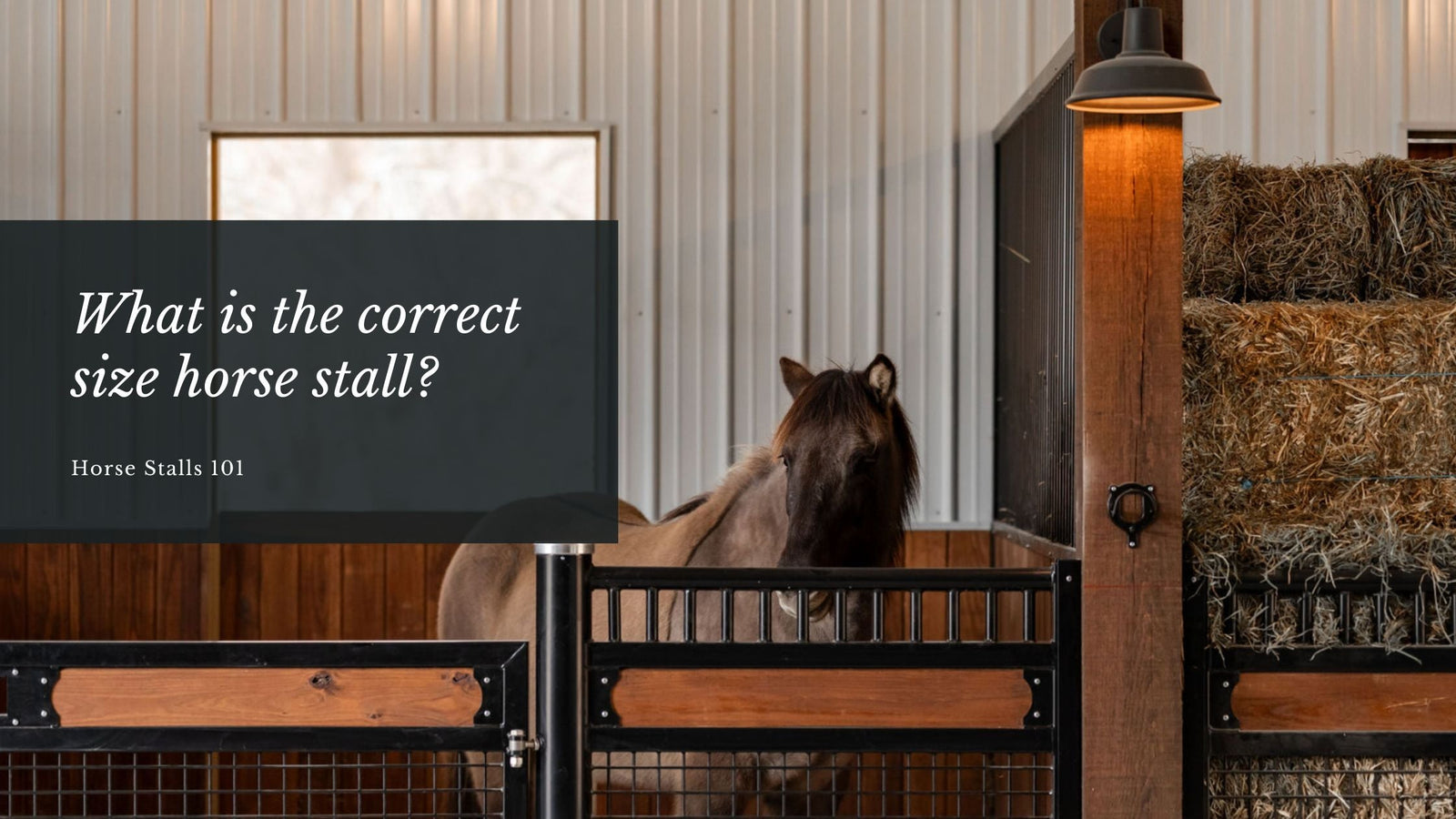
Many of our customers don’t have just one breed or type of horse, whether they’re individual owners or commercial training businesses. Because of this, our customers usually ask, “What is the best size horse stall for our particular situation?”
In the world of Horse Stalls, there is truly no “one-size fits all” option. A stall’s size depends on your horse's size, temperament, and individual tendencies.
Whether building a new barn or adding more stalls, it is crucial that barn owners prioritize figuring out the size of stalls to ensure a safe, comfortable home for their horses.
Here are some things to consider during your next horse stall project:

Our design team is here to share our ten years of experience working with everyone from individual barn owners to horse shows carrying 1,000 stalls. We’re always here to help. Contact us today for a free consultation on your upcoming stall project!