January 29, 2021

It's no secret that finding your dream home (and dream barn) is tough. Although we have access to dozens of apps and search tools, the chase for your dream property can be daunting. In many cases, it can take years to find a property that is just right. After all, a real estate property – consisting of the land, the home, and the horse barn – must meet our list of criteria.
That is why, in our experience, it is so important to work with the right real estate agent and firm. The right agent and firm will be less focused on making a quick sell. Instead, they will work hard to build a relationship with you. The right agent and real estate firm will work hard to understand your needs, your future hopes, and the various things on your wish list.
In today's small business spotlight, we'd like to feature an individual who embodies all of the above: Shannon Gilmore, from Washington Fine Properties. With over 16 years in real estate, Shannon takes an individualized approach to each transaction, tailored to her clients’ unique needs and specifications.” Shannon provides her clients a deep seated knowledge of equestrian properties as she owns her horses and is also a VADA Member Virginia Dressage Association.

We recently had a chance to sit down with Shannon to learn more about her journey, her tips regarding equestrian real estate, and more!
American Stalls: What is your background relating to horses?
Shannon: Horses have been in my life for as long as I can remember, although I didn’t become a horse owner until was an 18. Most of my life I have had my horses at home and enjoy taking care of them here. It's not always easy, but I like being with them daily and have started four of them. My experiences with horses has varied. I have an appreciation for all equestrian activities whether it be training, competing or a backyard rescue. I also have spent time as a side walker and am in awe of the great therapeutic value an equine connection provides.
American Stalls: Did you grow up with horses?
Shannon: I grew up hearing stories from my Irish grandmother and her sisters about their adventures with their horses. When I was 5, I went to my sisters riding lesson and started pestering my parents for all things horse. Growing up I exercised neighbors' horses, took lessons, volunteered at horse shows, and cleaned horse stalls at the local horse stables in exchange for riding time.
American Stalls: Did you ever compete?
Shannon: I have competed in both English and Western classes. In hand, halter, equitation, western pleasure, trail, and lately dressage. I have showed my horses up and down the east coast from Maine to NC.
American Stalls: Do you still have horses today? If so, what breeds, how many, and what are their names?
Shannon: Last year, I lost Max at 28 years of age. He came to live with us as weanling. That being said, I have and live with my three horses: Nikki (27) Appaloosa, Blue (13) Appaloosa, and Bella (9) Thoroughbred.

American Stalls: Moving into your professional life, what is your professional background?
Shannon: I earned my B.A. from Lesley University, a MS Ed from Shenandoah University. Like many working moms, my professional background zigs and zags around the family, farm and raising children. I spent 12 years as a public school educator later moving into a real estate. As a realtor I continued to pursue learning – earning numerous industry designations and certifications. I am currently working on my brokers license and have a license in the District of Columbia.
American Stalls: What do you do?
Shannon: I sell residential real estate across all price points, with a focus on horse properties and properties with acreage.
American Stalls: How long have you been with Washington Fine Properties (WFP)?
Shannon: I left a larger cooperate owned brokerage and went to WFP 2 years ago. I became a licensed agent in 2003.
American Stalls: How did you transition and get into real estate?
Shannon: When my children were in middle school, I needed a more flexible schedule so I ultimately transitioned from teaching to real estate.
My interest in real estate came from my own experience buying and selling homes. I felt like I did not fully understand the process. That is why I decided to pursue a license class. I didn’t realize a desire to learn would turn into a career. I also love everything about houses, construction, architecture, interiors, design, and of course equestrian properties and farms! Two of my favorite homes I have sold have been barn conversions.
American Stalls: Within real-estate, do you have a specialty?
Shannon: Given my background I am naturally drawn to property with acreage and suitable for horses or other farm animals. This naturally leads to certain dollar figure homes and horse farms. The median price in my selling area for a home is $550,000 with properties with acreage and equestrian properties selling from $800k well into the millions.
Location wise, my office is in the heart of horse country in Middleburg, Virginia. I work in the surrounding areas and also have a license in the District of Columbia
American Stalls:What do you enjoy most about real estate and WFP?
Shannon: What I enjoy most is helping people achieve their goals whether selling a home or buying a home. I like to go the extra mile and make the experience as pleasant as possible – service and experience matter! WFP is a smaller company (160 agents) with well trained professionals, exceptional resources, and offices across the DC, Maryland, and Virginia area. I often network within my own company and appreciate the dedication to client service.
American Stalls: How has COVID affected your business? How has COVID changed how buyers go about the purchase process?
Shannon: Fortunately, COVID has had a minimal impact on our real estate business. Clients have still purchased homes and the market has continued to move at a swift pace with more people wanting space and acreage. The way I sell a house is slightly different in that there may be more technology involved. We have pivoted slightly to providing virtual showings and open houses, following CDC guidelines and using PPE, zoom meetings and closings. We have always been extremely flexible and thoughtful with client health and safety in the forefront. One closing I had recently in Upperville took place outside on a front porch with a patio heater.

American Stalls: Do you have any tips for someone who is looking at purchasing an equestrian property?
Shannon: My number one tip would be to work with an experienced agent who has an equestrian background. The insight, contacts (such as American Stalls) and area knowledge he/she can provide is invaluable.
Another tip would be to pick the right type and size of property for your needs. Does the property allow for what you want to do now, and perhaps in the future? For example, if you have dreams of trail riding and you work with an agent unfamiliar with the area you might be pretty disappointed to find out that the local trails are restricted. (Shannon wrote a blogpost earlier about 3 Major Things to Consider When Buying an Equestrian Property).
American Stalls: What tip would you give other (equestrian) realtors to succeed in today’s climate?
Shannon: I think focusing on building relationships and being generous with your connections and experience. Most people don’t appreciate being sold, they appreciate sincerity, knowledge and honesty.
We'd like to thank Shannon for her time and valuable insight into the equestrian real estate industry. You can learn more about Shannon Gilmore and her fantastic real estate portfolio here on Washington Fine Properties.
Did you miss our previous' Small Business Spotlight Series spotlights? If so, below are more spotlights on some of our favorite equine businesses and professionals:
1) Equivont – An Online Marketplace
2) Rose of Sharon Equestrian School – Therapeutic Riding Facility
3) StableStyle – Online resource for inspiration and dream barns
4) Bethany P Photography – Photography and Branding for Equestrian Businesses
January 25, 2021

As horse people, we understand that horse stalls are significant investments for any horse barn.
Although we custom build fully welded horse stalls, we understand that clients often want some cushion and flexibility when it comes to costs. That is why we also offer horse stall kits.
Our horse stall kits are designed to provide you high quality horse stall components while striking a balance with costs. These kit stall components allow you to build safe, durable, and properly engineered stalls with minimal carpentry work. Our horse stall kits include some combination of:
Horse stall fronts usually will include grillwork, u-channels, and a stall door of your choice. Horse stall partitions will include grillwork, u-channels, and wall stiffeners.
Horse Stall Kit Components – Explained:
U-Channels
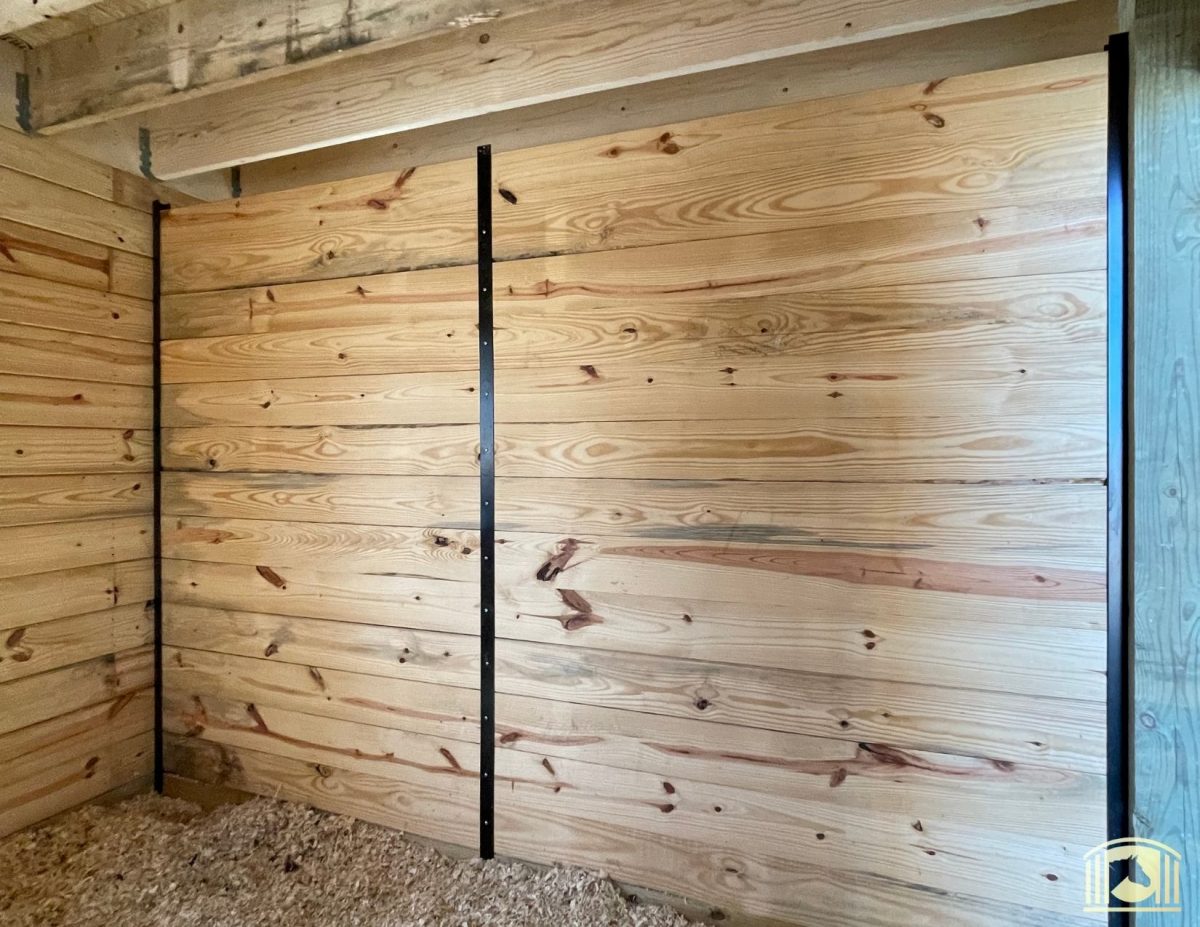
U-Channels are vertical steel channels that hold the tongue and groove lumber in place. We manufacture our u-channels in two lengths including 4′ and 8′.
4′ U-channels are often used for stall front sections and horse stall partitions. Once installed, a client can then install grillwork on top of the installed tongue and groove lumber. 8′ U-channels are often used for full wood partitions between horse stalls.
Grillwork
Grillwork is also known as a “horse stall window” or “grate.” Grillwork is usually installed along the top halves of stall fronts and stall partitions. Our grillwork include the following standard specifications:
Our stall front and stall divider grillwork uses concealed welding so our steel bars are punched through laser cut steel frame. The bars are then welded on the interior of the frame. All welds are then out of sight on the underside of the channels. This is a small detail, but adds to the longevity and durability of your horse stall.
Wall Stiffeners
Wall stiffeners, otherwise known as wall braces, add more rigidity to your stall walls. They achieve this by connecting the tongue and groove lumber boards together. Wall stiffeners are most commonly used for horse stall partitions, but can also be used for stall fronts.
All wall stiffeners are constructed of heavy-duty 14-GA United States steel and come with proper fasteners.
Stall Doors
There are two primary types of stall doors including hinged stall doors and sliding stall doors.
Hinged stall doors make for a beautiful, traditional look. Clients often use our Stall Gates as their primary stall doors. More often though, we see that clients use our hinged Stall Gates as a complement to an existing sliding stall door. Regardless of your choice, clients should account that hinged stall doors require more aisle space since the door swings outwards. For this reason, we usually recommend clients to account for at least 12' for their horse barn's aisle width.
The second option, Sliding horse stall doors, tend to be the most popular among horse barns. This stall door style is generally more safe than hinged stall doors. This is because sliding stall doors slide alongside a horse stall front. As a result, the sliding horse stall door lies flush with the existing stall front. This means that the sliding stall door is not protruding or sticking out in a horse barn's aisle. When deciding on kit stall, the stall door is often the one place where the client spends time on their decision.

Do you have more questions regarding a horse stall kit? Our team has put together a helpful guide to provide more images and information regarding our horse stall kit options. You can download this guide by clicking here (Dropbox link).
Additionally, our team of experts is here to help you decide between the various options including sliding stall doors, hinged stall gates, grillwork sizes, and so much more. Contact our team today and one of our reps will be in touch within 24 hours.
December 18, 2020
One popular topic among our clients is how to set up the perfect foaling stall.
After all, you have invested a great deal – including a hefty stud fee, top-notch care, regular vet visits, and a high-quality nutrition program for your mare. Let’s also not forget the hours of effort that you have put into caring for your mare through her pregnancy. That being said, you’ve had the easy job as she’s the one who’s had to carry this goal for the past year.
Now, let’s talk about your soon-to-be new born foal. As a new born, your foal will likely be a tad clumsy and have less-than-desired vision. As he gets older, he will gradually becomes more aware of his surroundings. Over time, he'll develop curiosity which means that he’ll explore every inch of his stall. Similar to a newborn baby, every object and point serves as a potential hazard.
As you set up the foaling stall, we strongly recommend to think about safety, cleanliness, and convenience. Here's how to set up a safe, comfortable environment for your new arrival.
Stall Size:
Bigger isn’t always better, but smaller is almost always worse. Your mare needs space to roll around and get comfortable during her pregnancy. At a minimum, we recommend a 12’x18’ stall. An ideal foaling stall size is 12x24 or 20x20.
That being said, we understand that stall space is a premium in just about any barn. That is why we suggest to design your stalls with a hinged, swinging horse stall partition.

This hinged partition gives you the flexibility to transform two 12x12 stalls into a large 12x24 stall for foaling. Lastly, a hinged partition gives you the ability to create a spacious environment that your mare needs to comfortably and safely deliver.

If you'd like to see how our Hinged Stall Partitions can be transformed into the perfect setup for foaling horse stalls, check out this video. It provides a detailed demonstration of our Stall Partitions and Hinged Stall Partitions, and shows how these partitions are designed for flexibility and safety, ensuring an ideal environment for mares and foals.
Bedding:
A horse stall must be bedded to provide comfort to your mare, but also be safe for her newborn baby. Thick bedding is required and the stall must be kept clean. We recommend to end with foal-friendly bedding such as clean straw. Breeders prefer clean straw since it is not porous like wood shavings or sawdust. These porous materials can harbor bacteria that can make your foal sick.

In addition to traditional bedding, we highly recommend a stall mattress system. Our StableComfort flooring creates the perfect environment to keep your foal comfortable and safe. Our mattress system is proven to be the equivalent of about 4-6 inches of wood shavings.

In addition, while standing, this mattress system provides a supportive, even surface for your horses. While lying down, this mattress system helps provide plenty of support for your mare to rest. Lastly, StableComfort provides great, anti-slip footing for your energetic and active newborn foal.
Inspect Your Stall
It is a given that your mare – weighing close to 1,300 lbs – will lean, push, and test the limits of your horse stalls. She’s nesting and wants to make sure that she is safe.The same can be said about your newborn, curious foal. That is why your stall walls – including stall fronts and partitions – need to be free from any protruding elements. Inspect your stalls for protrusions that include feed bins, hay racks, tie rings, exposed steel components, and any exposed wood edges. Additionally, it is recommended to invest in strong horse stall partitions and hardware that will withstand her impact.
One great way to bolster your horse stall is to install our StableWall kits. These foam panels are designed with 1-1/2” foam and covered with a 1/4” thick rubber cover. These StableWalls create the perfect environment for your mare and foal to prevent injuries, prevent casting, and create a safer overall stall environment.

The above tips are in addition to our recommended standards for horse stall and barns. This means barn design and stall design that allows for ample airflow and ventilation. It means electrical wiring, water lines, and utilities to be well protected from their equine occupants. Lastly, it means that your horse stalls are built from heavy-duty materials, mindfully crafted, and designed with safety in mind.
Please reach out if you have any questions. You can get in touch with the team at American Stalls by giving us a call at (855) 957-8255 or filling out an inquiry form.
December 10, 2020
Airflow is a top priority for horse owners, no matter the climate. The right stall front design can significantly impact ventilation, equine health, and overall barn comfort. In this article, we explore how different materials, especially mesh, influence airflow in horse stalls.
November 09, 2020
Horse stalls come in all sorts of designs and sizes.
Among all of the available options, it is certain that your horse will spend a lot of time in their horse stall. In addition to the basics for comfortable and safe horse stalls, there are a lot of add-ons that can add safety, elegance, and function.
During the purchasing process, we walk clients through a variety of add-ons. Although these add-ons drive up the cost upfront, they are priceless in the long run. These add-ons are valuable because they:
Here is a concise list of 5 upgrades to consider when making your upcoming horse stall purchase:
Mesh or Grilled Bottoms
Steel mesh or steel bars allow for optimal ventilation in a horse stall. Aside from ventilation, steel mesh and grilled bottoms also allow a horse owner to look down the aisle or into the stall as they walk down the aisle. This way, an owner can always maintain visibility of their horses. The only drawback is that bedding can be kicked into the aisles. To combat that, we recommend to add bedding guards to the bottom of each stall door.

Removable or Closable Yoke
A yoke is the opening in a horse stall door through which a horse can hang his or head outside of the horse stall. Yokes come in all sorts of styles including V-Shaped yokes, square yokes, rectangular yokes, and more.
Horse owners - especially in busier commercial barns - don't like the idea of allowing a horse to hang their head in the aisle-way. This is because some horse owners are concerned that their sale horse will bite incoming visitors.
One option to add function and versatility is a closable yoke.
You can add a closable yoke by either having a completely removable yoke piece or a hinged, drop down yoke. At American Stalls, we tend to recommend our clients to consider removable yokes as opposed to hinged, drop down yokes. This is because horses tend to be playful and play with the yoke that has folded down on the door. To avoid the playful nature and any shenanigans, we tend to recommend removable yokes.
Feed Doors
Feed doors come in the form of large-grilled feed doors that swing outwards. These doors are built into stall fronts so our clients can feed quicker and easier. These feed doors are especially helpful if you have barn help that is unfamiliar with horses. This way, the individual does not have to enter the horse stalls to provide feed or water.

Automatic Waterers
Automatic waterers are usually installed in either the horse stall's corner or mounted into the stall front. Automatic waters have the advantage as they allow for a constant source of clean water available to your horse. They are also easy to clean.
Sliding Stall Doors
This is not necessarily an "add-on," but we do tend to recommend sliding stall doors as opposed to hinged stall doors.
A sliding stall door allows you to save time in opening and closing the door every time the horse is turned out. In regards to safety, sliding horse stalls are easier to open and close. In the event of a fire or other emergency, a human handler can easily slide open the stall doors, lock them in place, and attend to other stalls. In contrast, hinged stall doors pose a safety hazard when left unlatched in an aisle. For these reasons, we strongly recommend that you consider a sliding horse stall door that can lots of long-term value.
Do you have more questions regarding your existing stall doors or a new stalls project? Contact us today and our team would be happy to assist with any questions and project planning.

Below are more helpful resources and articles recently shared by our American Stalls team:
October 26, 2020
September 09, 2020
As of September 2020, it is safe to say that we are living in unprecedented times with plenty of change. In the middle of this change, one thing does remain the same though. That one thing is barn safety protocols.
The fall season is the perfect time to start your preparations for winter. The days are usually cooler. There are less insects in the area or died off. In short, the fall time makes the perfect conditions for getting the barn ready for use over the winter. A simple, yet thorough inspection of your horse barn can help you keep your barn safe this winter.
Here are five things we recommend to do to prepare the barn for winter:
1. Deep Clean All Horse Stall Equipment
Clean horse stall equipment goes a long way in any season, but it is even more important to thoroughly clean in preparation for the winter. We recommend to remove bedding from the summer and early fall. Use agricultural lime or stall drying products to dry up any wet spots. Clean and remove all dangerous cobwebs, debris, and general clutter. Double check all electrical appliances (i.e. fans, heaters, etc) of any flammable buildup.
2. Inspect Bulbs and Electrical Components
No matter the age (or condition) of your barn, we recommend to schedule inspections on your wiring and electrical outlets. A thorough inspection includes the clearing of dust, debris, and cobwebs. Replace any blown bulbs and check wires for fraying.
We also recommend to outfit your barn with battery-powered (or solar powered) flashlights to provide safe access to your barn during power outages. Please note that all outlets or frayed wiring should be immediately repaired by a licensed professional.
3. Inspect and Clean Your Feed Room
Chilly fall evenings are often a cue for rodents to look for extra food. Before you know, a horse barn's feed room can be an ideal outlet for rodent. For this reason, we recommend to clean up your feed room to help reduce the risk of rodents and insects. Sweep up spilled feed that will attract your unwanted guest.
Inspect your storage containers to make sure the lids seal tight. We recommend metal trash cans or metal bins instead of plastic bins that can be chewed through by rodents. Lastly, if you store hay in your feed room, use pallets that allow for better air circulation.
4. Prepare & Check Water Supply
Keep an eye on the water trough and take measures to prevent any and all freezing. A high-quality heating device is a sound investment and can help ensure your horse is well hydrated through the winter months.
Alternatively, if you use hoses, check the hoses for any leaks. Replace or add on to the existing hose length. Lastly, while the consumption of snow is generally not a health hazard for horses, it is not a good substitute for fresh water. It will not prevent your horse from getting dehydrated over the winter.
5. Check for Drafts and Superior Ventilation
Ventilation is essential for a horse's overall health and specifically lung health. However, large drafts can be dangerous in temperature regulation. For older barns, we recommend that your barn structure. This means to check Barn End Doors and Barn Windows to cover any holes that let in too much air. Replace any broken Barn Doors, Barn Windows, Dutch Doors, or faulty door latches.
That being said, please remember that airflow is still critical in any barn even during winter months. Good ventilation can help reduce respiratory ailments among your horses. For this reason, we also recommend to inspect your existing stall doors, stall fronts, and other components to ensure they allow for maximum ventilation within the barn.
This list is far from an exhaustive lists since you can always do more to get ready for the winter. That being said, we recommend to start here so we we aren’t playing catch up during a winter storm. A thorough and mindful inspection can make sure to keep your horses happy and healthy this winter!

June 17, 2020
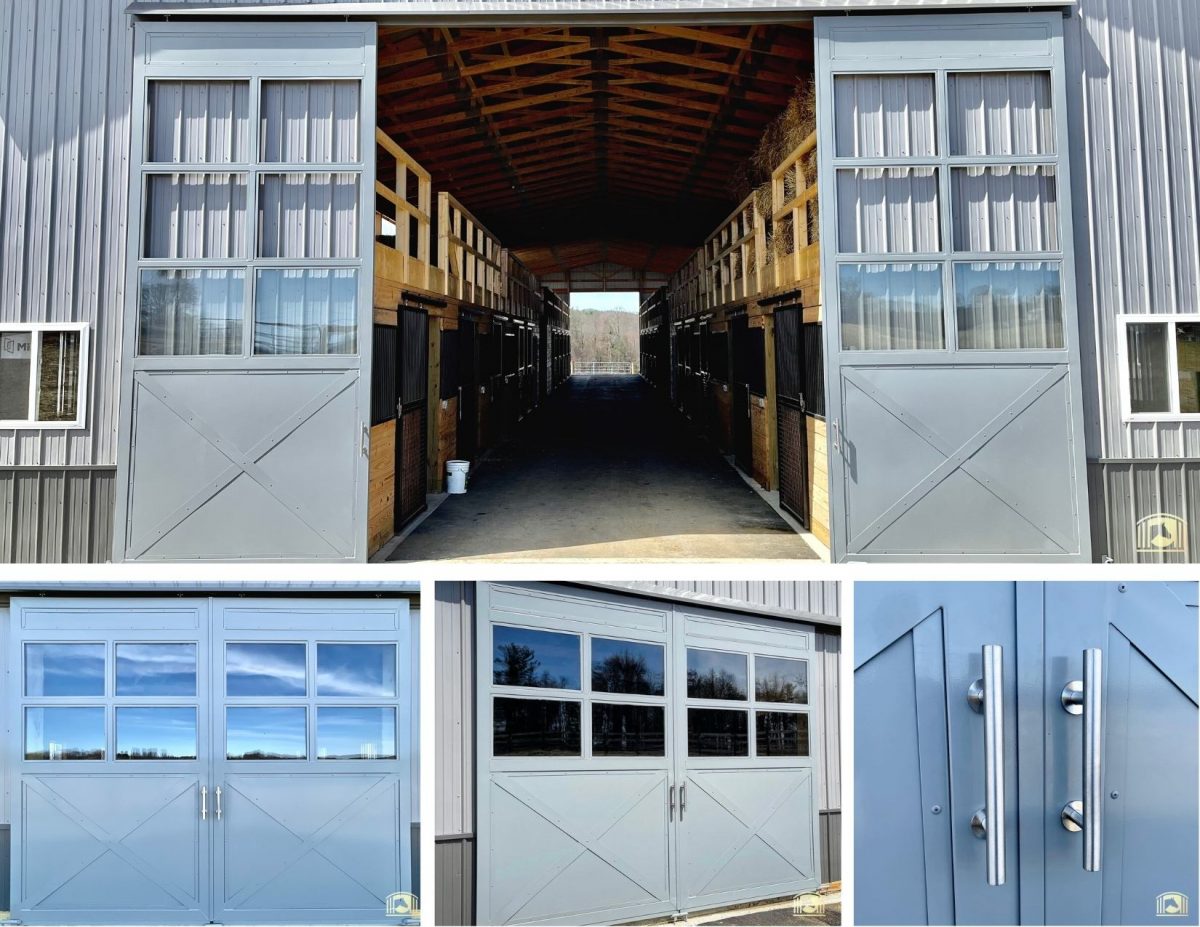
Barn-entry doors are one of the first features you notice upon entering a horse farm, making them a crucial design element. Whether for a private or commercial barn, the right doors enhance both aesthetics and functionality. Key considerations include ventilation and natural light—both essential for horse health and barn comfort.
June 01, 2020
Horse stalls are one of the first things that our clients begin to think about when they plan their upcoming barn project.
Chances are, you know exactly the look you'd like in your barn.
In the world of horse stalls, there are thousands of stall styles. In this ocean of choices, there are only two types of stall doors – sliding doors and hinged doors. Although it may not seem like it, your stall door choice is one the most important decisions when it comes to your horse barn. You will use your horse stall door thousands of times – opening it, closing it, leaving it open, and everything in-between.
That's why it's important to make a well-informed decision. As with any option, each door type comes with its pros and cons.

Hinged stall doors tend to be more common than sliding doors.
That being said, hinged stall doors tend to be less practical than sliding doors. This is because they must swing out into the barn aisle. This means that your barn aisle must be fairly wide to accommodate the standard 48" wide horse stall door. If you are considering hinged stall doors, we suggest to consider the following:
Aisle Width: The aisle should be wide enough to allow for the hinged door to safely open and close.
Aisle Leveling: The aisle needs to be tempered and leveled. This is crucial since the bottom of a stall door can get stuck on uneven flooring. This is why we recommend to allow for an inch of clearance between the barn floor and the horse stall door's bottom. If your barn aisle is full of hills and bumps, we would advise against a hinged horse stall door.
At the end of the day, hinged horse stalls can provide your barn that elegant and traditional look.
While sliding doors don't have the open appearance of a European (hinged) stall door, they are still great investments for your horse barn.

For starters, sliding doors are a fantastic because they save valuable space. This is because the sliding horse stall door doesn't swing outward into the barn aisle. This space-saving feature makes sliding doors a perfect fit for busy facilities including horse boarding barns, training barns, and large venues.


Most importantly, we recommend sliding horse stall doors because of their safety advantage. Below are some thoughts and considerations:
Learn more reasons why you should choose a sliding horse stalls.
Despite the pros and cons, each horse stall door can function at a high level in terms of safety, day-to-day operations, and the overall look. Do you have more questions about stall components or barn safety in general? Contact an American Stalls team member today!
May 06, 2020

Did you miss our previous' Small Business Spotlight Series spotlights? If so, below are more spotlights on some of our favorite equine businesses and professionals:
1) Equivont – An Online Marketplace
2) Rose of Sharon Equestrian School – Therapeutic Riding Facility
3) StableStyle – Online resource for inspiration and dream barns.
There are two types of photos in the world of horses. The first type is a quick iPhone photo – whether it is of rolling hills, the barn, action shots of yourself at a competition, or simply a photo of your horse being a goofball.
The second type is a professional photograph.
The differences between an "amateur" photo and a professional photo go beyond just the photo quality and file. A high quality, professional equestrian photo captures details such as the human-horse bond, the variety of emotions, and other intricate details.
In this week's Small Business Spotlight Series feature, we're proud to feature one of our fellow clients, Bethany Pastorial who runs Bethany P Photography.

Bethany P Photography is more than just a photography business. During projects, Bethany becomes your creative director. She becomes who can take all your Pinterest boards, unicorn fantasies, and love you have for your horse and translate it into heartfelt, genuine photos. Bethany is the storyteller passionate about capturing your relationship with your horse.
We recently had a chance to sit down with Bethany to learn more about her journey, how she is handling COVID-19, and more!
Q: What is your background?
A: I was the stereotypical horse crazy girl growing up in the suburbs with Breyer models and a ton of Saddle Club books. Every time we passed a horse farm I’d press my nose to the car window - you can still catch me doing that!
I started riding lessons when I was 6 on the old grey Arabian mare and “the phase” has never left. From Arabians to cutting horses to the IHSA, I’ve hopped from English to western and back to English again. After college, I bought my first horse, Riptide. He’s my personal version of my favorite movie - The Black Stallion. We’ve shown all over the east coast in the Arabian breed circuit, but these days we’re a retired team doing what I call “backyard dressage.”
Photography has me on the road several weeks of the year so I enjoy pleasure riding my horses at home when I can on my farm in Missouri.
Q: Do you have any horses yourself? If so, what kind?
A: Yes! I have two horses - a 21 year old half Arabian gelding named Riptide and a 7 year old off track Thoroughbred named Morris.
This past November we purchased a 28 acre farm and turned a 30 x 50 cattle shed into a modest two stall barn. The day we brought the boys home fulfilled every childhood dream I had.
Q: How did your photography business begin?
A: I’d always loved horses and photography, but it wasn’t until 2014 that I put the two together when my horse, Riptide, foundered.
As I sat there icing his hooves, I scrolled through my phone at all the photos I had of him - selfies with his goofy nose on my shoulder, videos from our riding lessons, photos bought at horse shows. None of them really represented what it was like to love this horse, so the first thing I did when we were out of the woods was schedule a photo shoot. I realized no one should have to feel that way about a horse they love, so I married my two passions into Bethany P Photography.


Q: What do you enjoy most about your business and profession?
A: Every client - whether a private owner or a business - has an incredible story to tell and every story is completely different. I love the creative challenge of bringing that story to life. When my clients get excited looking at the back of my camera, it brings me the biggest sense of fulfillment because I know I’m nailing their vision.
I’m so humbled when someone decides I’m the right person to tell their story because as a horse lover myself I 100% understand the emotions that come with it.
Q: How has COVID-19 affected Bethany P Photography so far?
A: It’s certainly an anxious time to be a creative sole member entrepreneur right now, especially since my business relies very heavily on meeting someone face to face.
Several sessions have had to be rescheduled or placed on hold until it’s safe to travel as I take clients all over the country. So COVID-19 has made an impact on my business’s schedule for sure.
But one positive outcome from COVID-19 has been the influx of online communication which has never before been so frequent of candid. I’m not a fan of the term “social distancing” as I feel it’s really more “physical distancing,” and there are still plenty of opportunities to connect with others outside the four walls of our homes.
So while my business has certainly pumped the brakes on what is normally a busy season, I’ve tried to remain positive and continue talking to my clients and audiences - keeping the lines of communication open and honest while sharing in the common plight we’re all in.
Q: What tip would you give other businesses similar to Bethany P Photography (i.e. professional photographers, branding and marketing agencies, etc) during these tough times?
A: Stay positive and continue communicating with your audience. As creatives within the industry, we’re really supplying others with a distraction during tough times. Being that positive element will not only support your community but also position yourself as a leader when we emerge from this storm.
Just remember, it will be over one day, and we will return to the world with cameras in hand ready to capture the joy of returning to the ring, spending time with our four legged friends, and the industry’s road to recovery.
You can learn more about what is the heart and soul of Bethany P Photography in the video below:
April 20, 2020

FOR IMMEDIATE RELEASE
April 20, 2020
Contact:
American Stalls, LLC
(855) 957-8255
sales@americanstalls.com
American Stalls, an industry leader in custom equine equipment, is proud to announce its supreme level sponsorship of the League of Agricultural and Equine Centers.
The Sponsorship will start effective immediately on April 16, 2020 and extend through the remainder of the 2020 calendar year.
"The League of Agricultural and Equine Centers is excited about our newest Sponsor American Stalls joining the League. We rely on sponsors to support our mission and to provide information and quality products to our members,” said The League’s Executive Administrator Lynne Dickinson.
The move to sponsor the League was a natural transition for American Stalls. The company has worked with several member organizations of the League since the company’s original inception in 2006. This sponsorship demonstrates the strong alignment between our two organizations’ and a commitment to promote a mutual interest and passion: the promotion of high-quality equine equipment to meet the highest standards and safety of the equestrian community.
About American Stalls
Established in 2005, American Stalls is a leader in supplying innovative equine equipment to private barn owners and large commercial facilities across the world. American Stalls is a family owned and operated business to this day. We have more than 30 years of experience in the global steel industry – supplying high-quality products to the construction, electrical, and steel making industries. The American Stalls combines this steel background with our 15 years of trusted experience in the equestrian world. Over the past 15 years, we have worked with thousands of clients and manufactured over 8,500 horse stalls.
Today, American Stalls designs and manufactures custom made equine equipment including stall fronts, stall partitions, wash bays, grooming bays, portable horse stall systems, and flooring solutions. Our mission is to supply high-quality infrastructure that enables sustainable, long-term growth at equestrian facilities.
About The League of Agricultural and Equine Centers
The League of Agricultural and Equine Centers is a recognized professional organization that supports and promotes management personnel and maintenance procedures at agricultural and equine facilities. We are a primary resource for industry education, networking and advocacy for our members.
April 13, 2020

Did you miss previous weeks' Small Business Spotlight Series? If so, not to worry! Please see below for prior weeks' spotlight pieces:
1) Equivont – An Online Marketplace
2) Rose of Sharon Equestrian School – Therapeutic Riding Facility
Have you ever found yourself on Instagram? You swear to yourself that you'll limit your usage to five minutes – only to find yourself mindlessly scrolling through dream barns two hours later.
We often have a similar experience with Pinterest. We promise to limit our screen time, but end up pinning 200 pins and creating six boards full of home decor ideas, dream barn ideas, and more!
If you're nodding your head, chances are that you're familiar with this week's Small Business Spotlight Series feature – the popular Stable Style blog.

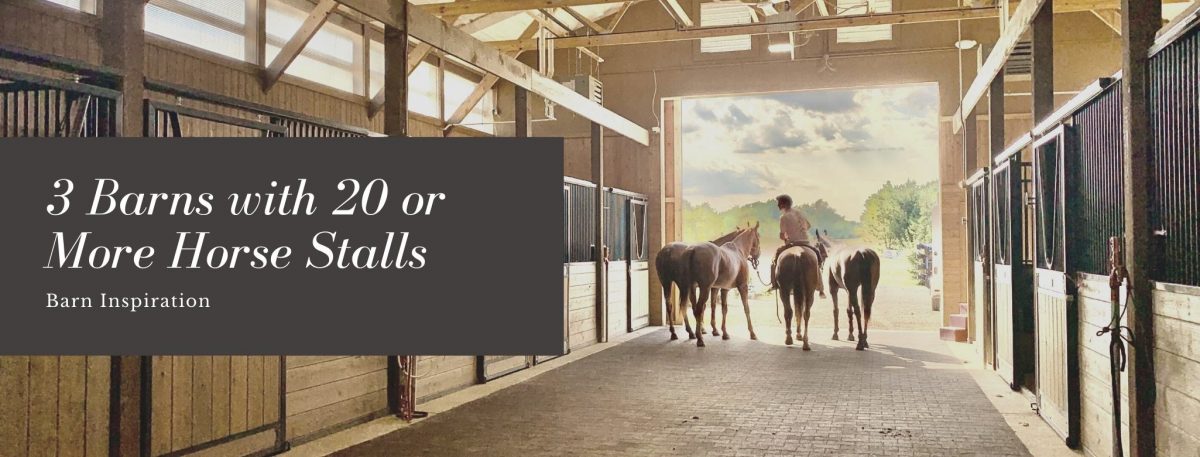
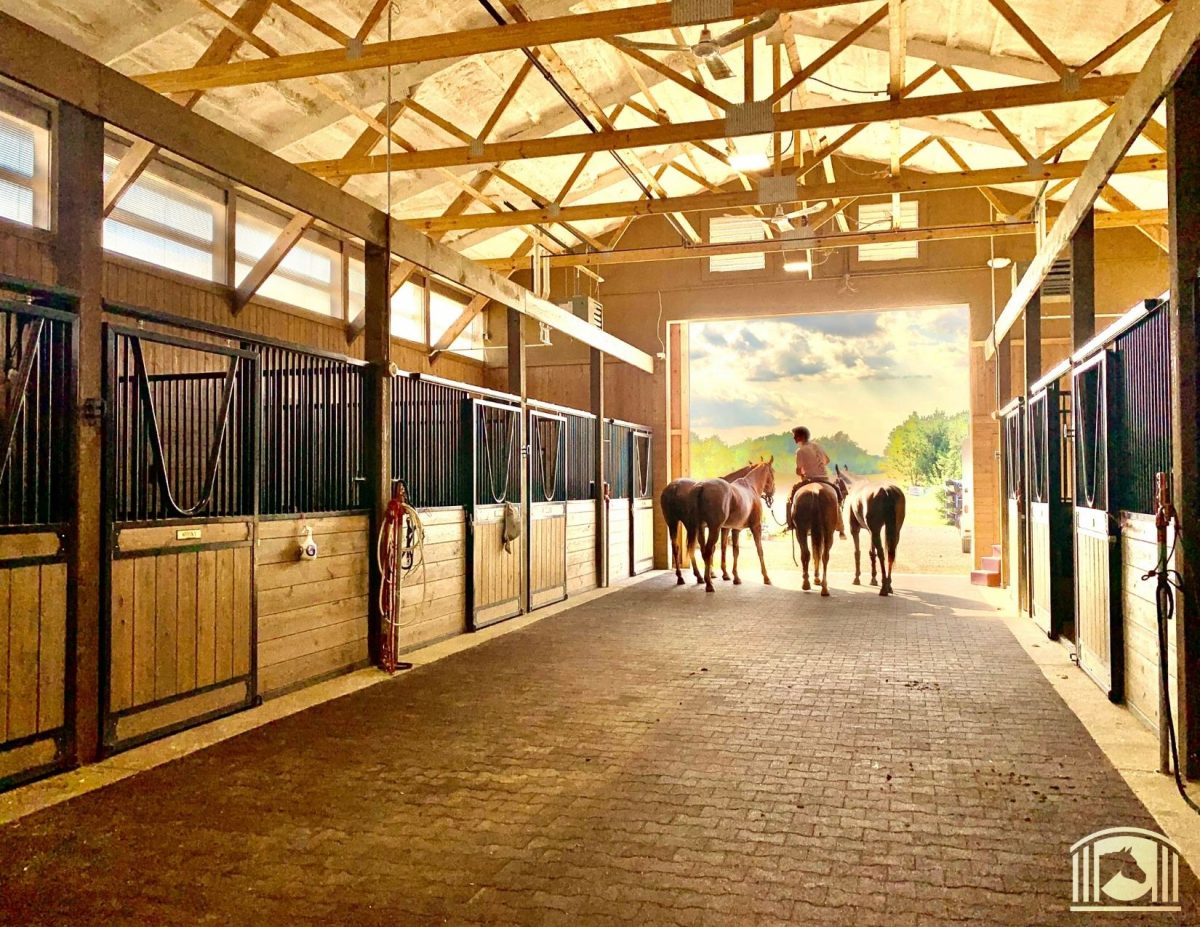
Stable Style, founded by Raquel Lynn, is a website dedicated to inspiring you as a reader with beautiful barns and stables. The goal is to excite you with barn and stable tours, renovations, and more.
Our team has enjoyed working with Stable Style in creating pieces about our American Stalls equine equipment. Over the years, we've found that Stable Style delivers tremendous value and inspiration to its readers.
We recently had a chance to sit down with Raquel and ask a few questions about her story. Read more below!

Q: What is your background?
A: I'm a full-time blogger and freelance writer for several equestrian publications. My first blog, Horses & Heels has been around for ten years. It started out as a passion project which I was able to monetize and turn into a career.
I grew up on a 400-acre dairy farm in northeast Ohio. I was lucky enough to be one of those girls who grew up with a pony. My mom rode and passed on the horse crazy genes. I grew up showing just about every discipline. Eventually I decided just to stick to barrel racing and competed throughout Ohio with the National Barrel Horse Association (NBHA). My whole life has been based around horses and so is my career.
Q: Do you have any horses yourself? If so, what kind?
A: I have a registered Paint Horse, HH Indys Nu Daisy aka Fira. I'm lucky to keep her at home in my urban neighborhood in Los Angeles.

Q: How did Stable Style begin?
A: Stable Style started out as a section on my blog, Horses & Heels. I loved sharing my "Stable Style" content so much that inspired me to create a dedicated platform for it. I realized it was a popular niche and that I wanted to start its own blog.
I grabbed the Instagram handle in December of 2015 and launched Stablestyle.net in the spring of 2016. I've always loved interior design and architecture - this is the way I fuse that passion together with horses.
Q: What products/services does Stable Style offer?
A: Stable Style generates free content for readers all around the world. I offer a variety of advertising packages and listings for equestrian brands, especially barn related niches.
Q: What do you enjoy most about operating Stable Style?
A: I enjoy sharing barn tours, chatting with owners, architects and owning a happy platform. My goal is to be a source of inspiration for every equestrian.
“A barn is a sanctuary in an unsettled world, a sheltered place where life’s true priorities are clear. When you take a step back, it’s not just about horses — it’s about love, life, and learning. We honor our horses for their brave hearts, courage and willingness to give. Indeed, horses have the hearts of warriors and often carry us into and out fields of personal battles. Those who know them understand how fully a horse can hold a human heart.”
– Lauren Davis Baker
Q: How has COVID-19 affected Stable Style so far?
A: My blog traffic is up 40% right now, so that's wonderful. Advertising network rates have dropped over 50% which is taking a toll on revenue for me. However my private advertisers are benefiting from the traffic. I am lucky enough to always work from home so that hasn't changed for me.
Q: What tip would you give other businesses similar to StableStyle (i.e. online retailers, online tack shops, etc) during these tough times?
A: Remain active on Instagram and social media during this time. Your customers are spending more time online right now. While sales might be down, there are still lots of active shoppers looking for a deal. Take the time to tackle projects you wouldn't normally get to do during this time.
To learn more about Stable Style and its fantastic barn resources, please check out the website here.
Subscribe to our newsletter to receive the latest updates, barn inspiration, and expert tips delivered directly in your inbox.